
Falls from ladders kill about 300 workers every year in the United States, according to the Bureau of Labor Statistics. One overlooked cause is rung spacing that falls outside the legal range. A rung too far apart puts strain on the climber. A rung too close together creates a tripping hazard.
This guide covers the exact spacing required by OSHA and ANSI, how to check your own ladder, and which ladders are built to the correct standard.
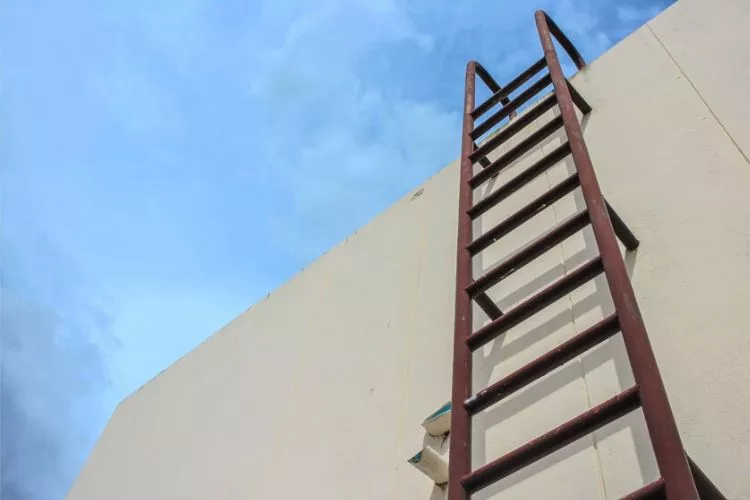
How Far Must Ladder Rungs Be Spaced?
OSHA standard 1926.1053(a)(3)(i) requires that rungs, cleats, and steps on portable and fixed ladders be spaced no less than 10 inches (25 cm) and no more than 14 inches (36 cm) apart, measured between centerlines. The ANSI A14.3 standard is more specific: it sets the standard spacing at exactly 12 inches, with the bottom rung allowed up to 14 inches from the ground.
| Ladder Type | Required Rung Spacing | Standard |
|---|---|---|
| Fixed Ladders | 10 to 14 inches | OSHA 1910.23 |
| Portable Extension Ladders | 10 to 14 inches | OSHA 1926.1053 |
| Step Ladders | 12 inches (standard) | ANSI A14.2 / A14.5 |
| Combination Ladders | Matches configuration in use | ANSI A14.6 |
| Job-Built Ladders | 10 to 14 inches | OSHA 1926.1053 |
🪜 Rung Spacing by Ladder Type

Step Ladders: ANSI A14.2 and A14.5 set step spacing at 12 inches. Step ladders are self-supporting, so the standard is stricter because users often carry tools or materials while climbing.
Extension Ladders: OSHA 1926.1053(a)(3)(i) allows a range of 10 to 14 inches. Most commercial extension ladders are manufactured at 12 inches to meet both OSHA and ANSI requirements simultaneously.
Fixed Ladders: OSHA 1910.23 governs fixed ladders attached to buildings and structures. The same 10 to 14 inch spacing applies, with 12 inches being the industry standard for new installations.
Combination Ladders: These switch between step and extension configurations. The rung spacing must comply with whichever mode is active at the time of use.
🪜 Why Rung Spacing Matters: The Safety Case
Rung spacing affects how your body moves on a ladder. When spacing is too wide, your stride length increases and your center of gravity shifts. This raises the risk of slipping.
When spacing is too narrow, your knees rise too high with each step. This forces an awkward climbing posture that tires you out faster and increases the chance of catching a foot on a rung.
OSHA specifically cites improper rung spacing as a contributing factor in ladder fall investigations. Any ladder with spacing outside the 10 to 14 inch range is considered non-compliant and must be taken out of service immediately.
🪜 How to Measure Rung Spacing on Your Ladder
- Lay the ladder flat or lean it stably against a wall. Do not measure while the ladder is in use.
- Find the center of the first rung. This is the midpoint of the rung diameter, not the top edge.
- Measure to the center of the next rung. It should fall between 10 and 14 inches. For step ladders, it should be exactly 12 inches.
- Repeat for every rung pair. Spacing can shift over time on older or damaged ladders. Check all rungs, not just the first few.
- Compare against the label. Every compliant ladder has a label with its ANSI or OSHA rating. Cross-reference your measurements with the listed specifications.
- Tag and remove non-compliant ladders. If any spacing is outside the acceptable range, mark the ladder “Do Not Use” and contact the manufacturer.
🪜 Ladders Built to the Correct Rung Spacing Standard
If your current ladder fails the spacing check, or if you are buying a new one, these three options are built to OSHA and ANSI standards from the factory.
1. Werner D6228-2 — 28-Foot Fiberglass Extension Ladder
Type IA rated at 300 lb. Fiberglass non-conductive rails. Rung spacing is exactly 12 inches, meeting both OSHA 1926.1053 and ANSI A14.3. The Alflo rung joint prevents twist during use. Widely used in construction and facilities maintenance.
2. Louisville Ladder FS1506 — 6-Foot Fiberglass Step Ladder
Type IA rated at 300 lb. Non-conductive fiberglass. Each step rises exactly 12 inches, fully meeting ANSI A14.5. Slip-resistant rubber feet on all four legs. Includes Pro-Top with tool slots and paint bucket holder. Meets all OSHA and ANSI standards.
3. Little Giant Classic Model 17 — Multi-Position Ladder
Type IA rated at 300 lb on both sides. Heavy wall aerospace-grade aluminum. Can be used in 24 configurations including A-frame, extension, staircase, and scaffold. Rung spacing meets OSHA requirements across all configurations. Wide-flared legs provide stability that standard ladders cannot match.
🪜 Ladder Safety Tips and Best Practices
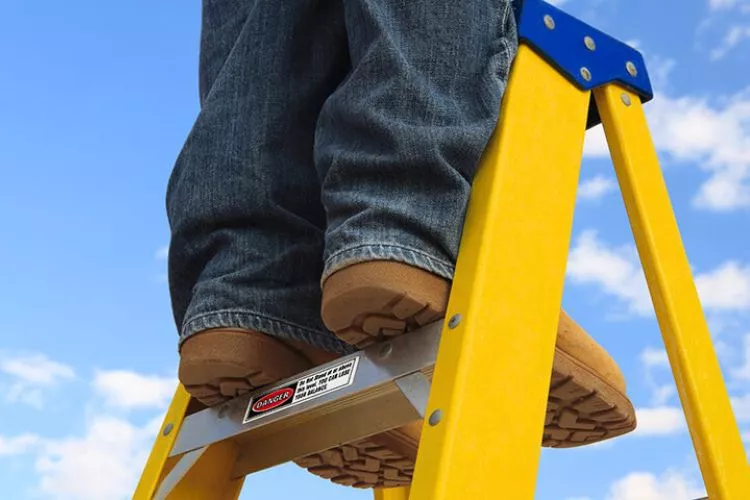
- Inspect rung spacing before every use, not just during annual inspections. Rungs can loosen over time.
- Never use a ladder that has been modified or repaired by anyone other than the manufacturer. Modified rungs almost never meet the original spacing specification.
- Maintain three points of contact at all times: two hands and one foot, or two feet and one hand.
- Store ladders horizontally on padded supports. Storing vertically under load can warp the side rails and cause rung spacing to shift.
- Replace any ladder that shows bent, cracked, or missing rungs. There is no compliant way to repair a damaged rung in the field.
Frequently Asked Questions
What is the OSHA requirement for ladder rung spacing?
OSHA standard 1926.1053(a)(3)(i) requires rung spacing to be no less than 10 inches and no more than 14 inches, measured between centerlines. This applies to both portable and fixed ladders used in construction.
What is the standard rung spacing for a step ladder?
ANSI A14.2 and A14.5 set step ladder rung spacing at 12 inches. This is more specific than the OSHA range because step ladders are self-supporting and used in a wider variety of positions.
How do I measure rung spacing correctly?
Measure from the centerline of one rung to the centerline of the next rung. Do not measure from edge to edge. Use a tape measure with the ladder on a flat, stable surface.
What happens if ladder rung spacing is wrong?
A ladder with spacing outside the OSHA range is non-compliant and must be taken out of service. Using a non-compliant ladder in a workplace can result in OSHA citations and fines. Beyond legal risk, improper spacing increases fall risk for the user.
Can I repair a ladder with incorrect rung spacing?
No. OSHA prohibits field modifications to ladders. If the rung spacing is incorrect or a rung is damaged, the ladder must be removed from service and returned to the manufacturer, or discarded and replaced.
Does rung spacing affect ladder weight capacity?
Rung spacing and weight capacity are separate specifications. However, a ladder with damaged or improperly spaced rungs may not be able to support its rated load safely. Always verify both specifications before use.
Conclusion
Ladder rung spacing is a legal requirement, not a suggestion. OSHA requires 10 to 14 inches between centerlines for most ladder types, with step ladders standardized at 12 inches under ANSI. Measure your ladders regularly, remove any that fall outside this range, and replace them with ladders built to the correct standard from the start.
If you work regularly at height, see our guides on the best ladders for painting high walls, what a rung on a ladder is, and the correct angle for a ladder to keep your setup fully compliant.